
- 86 13631277884
- [email protected]
Home RF Beauty Devices: The Art of Circuit Design Balance
When you take apart a home radio frequency (RF) beauty device, the most critical component isn’t the shiny metal probe that catches your eye, but the circuit board inside, packed with components. As the "nerve center" determining a device’s performance and safety, the design of the RF circuit directly impacts whether it can deliver stable, safe energy in a home setting. Today, from the perspective of technical practitioners, let’s dive into the core logic behind circuit design for home RF beauty devices.
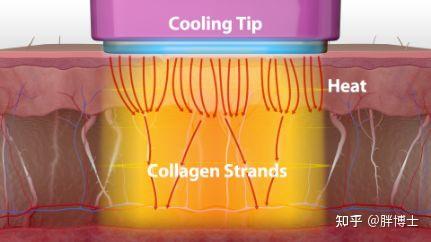
I. The "Backbone" of an RF Circuit: Three Core Modules
At its heart, the circuit design of an RF beauty device revolves around "how to precisely control high-frequency alternating current." A mature circuit system typically consists of three key modules that work together like interlocking gears to convert and deliver energy.
The RF generator module is the circuit’s "power source." Its main job is to convert household 220V AC into RF waves of a specific frequency—for home devices, this frequency usually ranges from 0.5 to 2MHz. During our debugging, we’ve found that frequency stability directly affects how deeply the energy penetrates: too low, and the skin’s surface may overheat; too high, and the effect on deeper layers weakens. That’s why the crystal oscillator components in this module undergo strict screening, ensuring frequency drift stays within ±5% even after an hour of continuous operation.
The control module acts as the circuit’s "brain," coordinating all parameters. The microprocessor here constantly receives signals from skin contact sensors—if the probe isn’t fully touching the skin, the system automatically reduces power; if it detects prolonged use on the same area, it switches to intermittent output. We once encountered an interesting debugging case: a product kept misjudging contact status in high-humidity environments. It was only after adding an environmental humidity compensation parameter to the control algorithm that the issue was resolved.
The safety protection module is the final line of defense. Beyond common overcurrent and short-circuit protection, home devices need special safeguards against "thermal runaway." An NTC temperature sensor embedded in the circuit monitors the probe’s temperature 10 times per second. If it exceeds the preset threshold (usually 42℃), RF output cuts off immediately. This threshold is carefully chosen to balance effective energy delivery with preventing user discomfort from overheating.
II. Design Trade-offs for Home Use: Balancing Safety and Experience
Adapting RF technology from industrial equipment to home beauty devices requires more than just shrinking the size—it means rethinking design for entirely different usage scenarios. In our factory’s testing workshop, we often use "extreme condition simulations" to validate design logic, and these considerations ultimately shape every component choice on the circuit board.
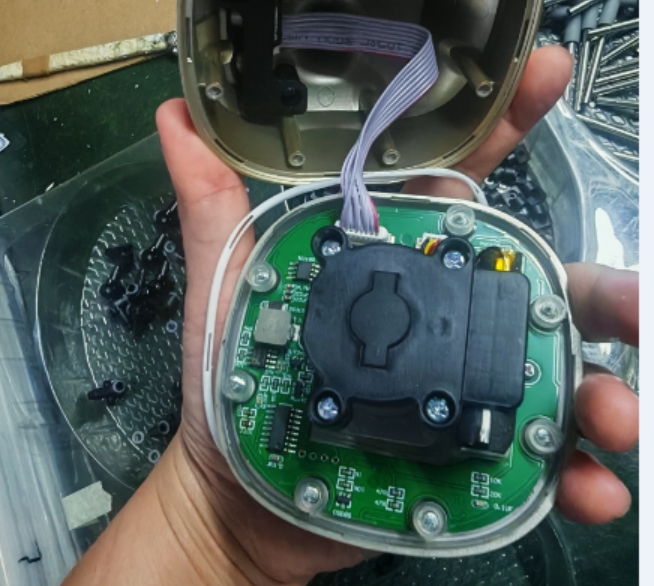
Energy adjustment precision is the first hurdle. Professional equipment uses knobs for continuous power control, but home products need simpler "stepped" settings. This demands a precise voltage divider circuit in the design, ensuring output error between each step stays below 8%. We once spent weeks fine-tuning feedback resistor parameters to smooth the transition between the first and second settings, accumulating reams of test data in the process.
Power consumption control is another design challenge. Built-in batteries have limited capacity, so how do we extend usage time without compromising results? Our solution is a dynamic power management module: when the probe detects low skin impedance, it automatically reduces drive current; in areas with higher impedance, it boosts energy output slightly. This "smart adaptation" design increases single-use battery life by about 20%.
Anti-interference capability, often overlooked by users, is key to reliability. Home WiFi signals and microwave radiation can disrupt RF circuits. We address this by separating the RF and control modules in PCB layout, using grounded copper foil to create an "electromagnetic shield." During a pre-production inspection, we noticed slight frequency fluctuations in one batch when near routers—adjusting the filter capacitor’s capacitance finally fixed the issue.
III. From Blueprint to Product: Quality Control in Smart Manufacturing
The true value of circuit design is realized only through production. On our SMT production line, every circuit board undergoes 18 inspection steps. These standards are shaped by years of observing how users actually use our products.
Solder joint quality is the foundation of circuit reliability. Home beauty devices are often left on vanities or near sinks, where moisture can cause solder oxidation. Our lead-free soldering process requires each joint to withstand at least 50 grams of pull force, with internal pores checked under a metallurgical microscope. Once, a batch of resistors had slightly subpar solder joints—we reworked the entire batch, a costly decision, but one that protected our long-term reputation.
Aging tests are "stress tests" simulating real use. Each circuit board runs continuously for 72 hours in a 45℃ incubator, cycling through all modes. We track temperature changes in critical components—for example, power transistors must not heat up by more than 25℃, or we revise the heat dissipation design. This "accelerated aging" reveals over 90% of potential faults early.
Safety certification is both market access and a design 底线 (bottom line). Every product passes IEC 60335 standards for household appliances, with 23 specific tests for RF functionality. One memorable test involved intentionally short-circuiting a protection resistor to check if the circuit shut down within 0.5 seconds. These almost "destructive" tests ensure safety even during user mishandling.
A small circuit board holds the technical core of a home RF beauty device. From fine-tuning RF waveforms to selecting component parameters and maintaining millimeter-level precision in production, every detail reflects a deep understanding of "home use scenarios." As a factory specializing in beauty device manufacturing, we believe great circuit design should act like an excellent butler—working quietly, unseen by the user, leaving only a sense of security and reliability. That’s perhaps the ultimate goal of technology: using precision to safeguard everyday beauty.