
- 86 13631277884
- [email protected]
Thought-provoking question: Why should you use a gel when using a beauty device ?
After years of deep involvement in the beauty device industry, we’ve identified a common issue: both end consumers and channel partners tend to overlook the core value of the "beauty device + dedicated gel" combination. Many people simply equate gel with "lubricant," unaware that it is actually a key link determining the effectiveness, safety, and user experience of beauty devices. Today, we will take you through the underlying logic of using gel with beauty devices—from technical principles and practical value to product selection logic—to help you fully understand it.
Get Straight to the Point: Why Must Beauty Devices Be Used with Gel?
Many people new to beauty devices wonder, "Since the device can directly touch the skin, why bother using gel?" In fact, this design is not "unnecessary" but a scientific consideration based on the energy mechanism of beauty devices and the physiological structure of the skin. Simply put, the core reasons for using gel with beauty devices can be summarized into three dimensions: "efficiency enhancement, skin care, and device protection." This is also the fundamental basis for the industry to position gel as a "standard consumable" for beauty devices.
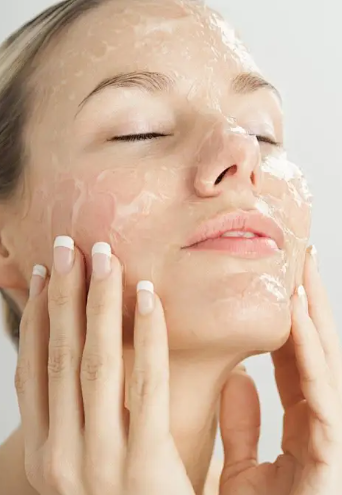
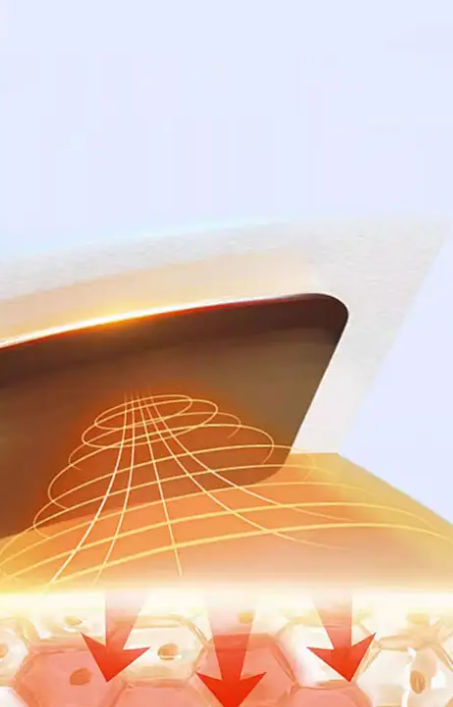
Core Logic: Gel is the "Conduction Bridge" and "Safety Barrier" for Beauty Device EfficacyThe core mechanism of beauty devices essentially involves using specific energies (such as radio frequency, microcurrent, photon, ultrasound, etc.) to act on deep skin tissues, stimulating collagen regeneration, promoting circulation and metabolism, or cleansing pores. For energy to be effectively transmitted from the device probe to the skin while avoiding damage to the superficial skin, two key issues must be addressed: energy conduction efficiency and skin protection—and this is precisely the core mission of gel.
The stratum corneum on the skin surface and air have a "blocking effect" on the energy of most beauty devices. Take mainstream radio frequency (RF) beauty devices as an example: RF energy conduction relies on "conductive media." Air has extremely low conductivity. If the probe is directly applied to the skin, most of the energy will be reflected or consumed by the stratum corneum, failing to achieve the anti-aging effect on the dermis and possibly causing epidermal burns due to local energy accumulation. For microcurrent beauty devices without a medium, the current cannot form a stable circuit, leading to a significant attenuation of muscle stimulation effects.
The emergence of gel is to solve this "conduction pain point." Through a special formula design, it possesses both "high conductivity" and "gentle protection," serving as an "intermediate medium" between the device and the skin, allowing energy to act on the target layer accurately and safely.
Key Question: Must Beauty Devices Be Used with Dedicated Gel? The Answer is "Absolutely"In daily communications with channel partners and terminal feedback, the most frequently asked question is "Can toner, lotion, or ordinary face cream replace dedicated gel?" From a technical perspective and practical use effect, the irreplaceability of dedicated gel is mainly reflected in three aspects:1. Alternative media cannot meet energy conduction requirements.
Toner has high water content but is volatile, forming a "dry layer" quickly after application, leading to interrupted energy conduction. Ordinary face creams contain oils, emulsifiers, and other ingredients that reflect RF, photon, and other energies, not only reducing efficacy but also possibly causing wear on the device probe due to energy reflection.2. Alternative media pose safety hazards.
Toners with high alcohol content accelerate skin moisture loss, which may damage the skin barrier when used with device heating. Lotions containing granular ingredients may scratch the epidermis during probe friction. Especially under the strong light of photon devices, the particles may also produce light reflection, causing skin burns.3. The "additional benefits" of dedicated gel cannot be replaced.
In addition to conducting energy, dedicated gel adds targeted ingredients according to the device type. For example, RF device gel contains moisturizing and water-locking ingredients to avoid skin dryness caused by heating; import device gel contains penetration-enhancing factors to improve nutrient absorption; light-based device gel contains soothing ingredients to reduce post-treatment irritation. These formulas cannot be matched by ordinary skin care products and are key to ensuring "efficacy + experience."
Scenario-by-Scenario Breakdown: How Does the Principle of Gel Differ for Different Types of Beauty Devices?
Different energy types of beauty devices have different formula requirements and action principles for gel. As B2B practitioners, clarifying the adaptation logic in different scenarios is essential to better provide solutions for downstream customers.
1. Radio Frequency/Microcurrent Beauty Devices: Conductivity is Core, Temperature Control is SupplementaryRF and microcurrent beauty devices are currently mainstream in the anti-aging market, and the core function of their gel is conductivity. Such gels add ingredients with good conductivity such as glycerin and propylene glycol to form a stable "device-gel-skin" conductive circuit, ensuring that RF energy or microcurrent can penetrate the epidermis and reach the dermis or muscle layer. At the same time, RF energy generates heat during operation. If heat accumulates on the epidermis, it is likely to cause redness and burns. The thick texture of the gel forms a "heat insulation buffer layer," allowing heat to conduct slowly and diffuse evenly. Combined with the device's temperature control system, it achieves "deep heating for anti-aging and gentle, non-irritating superficial skin." Experimental verification shows that with the same RF device, the dermis temperature can reach 42℃ (the ideal temperature for collagen regeneration) when using dedicated conductive gel, while only 35℃ when using ordinary moisturizer, with obvious burning sensation on the epidermis.
2. Ultrasound/Import Beauty Devices: Emulsification + Penetration to Improve Absorption EfficiencyUltrasound beauty devices promote the penetration of skin care product ingredients by making skin cells generate "micro-acoustic flow" through high-frequency vibration; import devices accelerate nutrient absorption through the principle of ion exchange. The core role of such gels is emulsifying cuticles + carrier delivery. The surfactant ingredients in the gel can slightly emulsify the old cuticles on the skin surface, opening "absorption channels." At the same time, the gel itself carries active ingredients such as vitamin C and hyaluronic acid, and accurately delivers nutrients to the dermis with the guidance of ultrasonic vibration or ions. Compared with directly applying skin care products, the penetration rate of active ingredients can be increased by 3-5 times when used with dedicated import gel—which is the key reason many brands emphasize that "import devices must be used with dedicated gel."
3. Photon/Laser Beauty Devices: Light Transmission + Soothing to Reduce Light DamageLight-based devices such as photon skin rejuvenation devices and laser hair removal devices rely on specific wavelengths of light to act on skin target tissues (such as pigments and hair follicles). The core requirements for such gels are high light transmittance + post-treatment soothing. If the light from light-based devices encounters turbid media, it will refract or scatter, leading to energy dispersion and reduced effectiveness. Dedicated gels adopt a high-purity transparent formula with a light transmittance of over 95%, ensuring that light directly reaches the target tissue. At the same time, light irradiation causes slight irritation to the skin, and the soothing ingredients such as panthenol and centella asiatica extract in the gel can instantly calm the skin and reduce post-treatment reactions such as redness and dryness.
Key for B2B Product Selection: How to Match "Highly Adaptable" Gel for Beauty Devices?
For channel partners and brands, selecting suitable gel can not only enhance product competitiveness but also reduce after-sales complaint rates. The following three core indicators need to be focused on:
- Adaptability: Customize according to the device energy type. RF/microcurrent devices require "high conductivity" gel (detectable by a conductivity meter, with a conductivity of ≥1000μS/cm being appropriate); light-based devices require "high light transmittance" gel (transmittance ≥90%); import devices require "small molecule carrier" gel (containing easily penetrable ingredients such as hyaluronic acid and ceramide).
- Safety: Avoid irritating ingredients. Terminal users have diverse skin types, so the gel must be "alcohol-free, fragrance-free, preservative-free (or using plant-based preservatives)" and pass dermatological sensitive skin tests.
- Experience: Balance skin feel and cleaning convenience. The viscosity of the gel should be moderate (too thin is easy to flow, too thick will hinder probe movement). It should be washable with clean water after use to avoid residue clogging pores. In addition, a faint plant fragrance can be added to enhance user experience.