
- 86 13631277884
- [email protected]
💎 RF vs EMS — The Frequency Difference That Defines Beauty Device Results
⚡ What Is RF (Radio Frequency)?
RF is a high-frequency electromagnetic wave, typically ranging from 0.3 MHz to 1 MHz (300,000 to 1 million cycles per second).
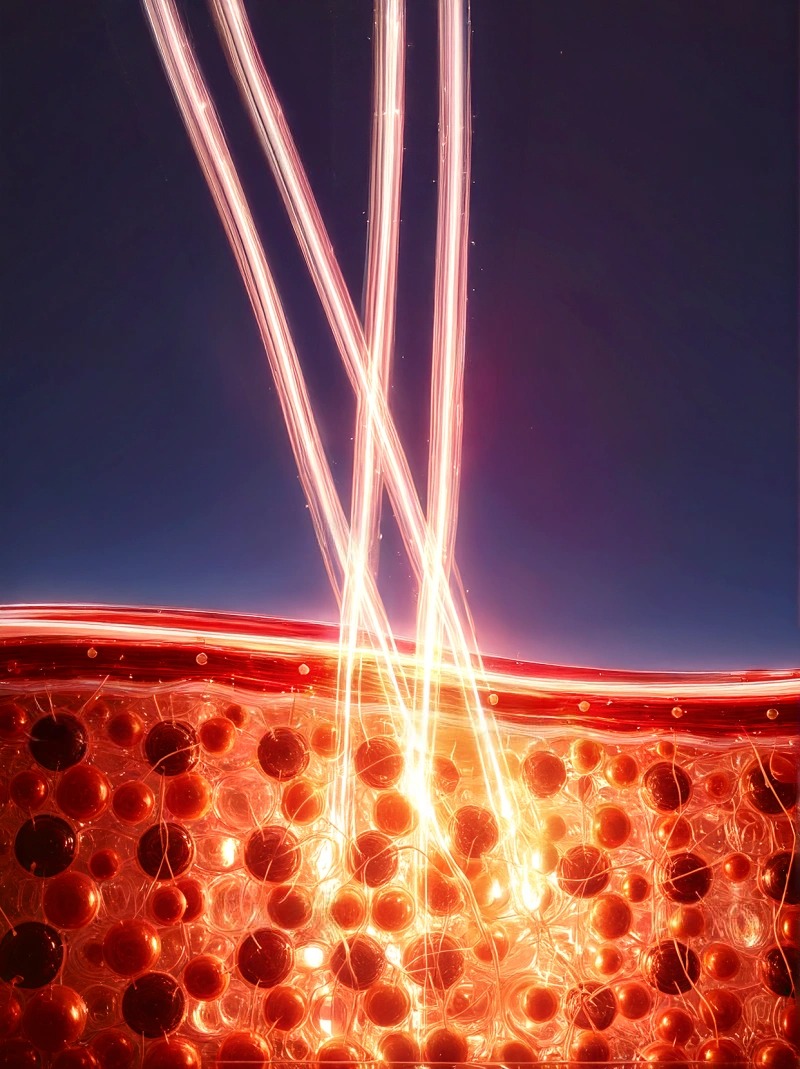
When applied to the skin, RF energy penetrates into the dermis, causing water molecules and ions to vibrate rapidly — generating controlled deep thermal energy.
✨ What It Does
Instantly tightens existing collagen fibers
Stimulates fibroblast activity to produce new collagen and elastin
Improves blood circulation and promotes skin metabolism
👉 In short: RF rejuvenates skin from within by heating the dermis, restoring firmness, smoothness, and elasticity.
Why can't we use "voltage" alone to judge the "penetration" of RF?
- The "penetration" of RF is not directly determined by voltage. Voltage is just an electric field/energy parameter. Key factors determining tissue heating include: electrode configuration (monopolar/dual/multipolar), frequency (MHz level), power/energy density (W/cm²), probe size and contact area, tissue conductivity, and the contact medium (gel).
- In near-field radiofrequency (commonly used in beauty devices), the current path and electrode spacing determine the location of the heating hotspot—monopolar current can be directed to deeper layers of the body (thus deeper), while dual/multipolar current mainly loops around the probe, concentrating heat more on the epidermis/dermis.
- Therefore, even if EMS specifies tens to hundreds of volts (such as the 90–145V you listed), that's low-frequency/pulse voltage used to stimulate muscles/ion transport, and cannot be used as a direct indicator of the "penetration depth" of RF (MHz thermal effect).
💡 What Is EMS (Microcurrent)?
EMS delivers low-frequency electrical pulses (typically 300 Hz to 5 kHz) that mimic the body’s natural bioelectric signals.
These gentle microcurrents stimulate facial muscles, helping them contract and tone — like a workout for your face.
✨ What It Does
Strengthens facial and SMAS (superficial muscle) layers
Lifts sagging contours
Enhances firmness and definition
👉 In short: EMS lifts and sculpts by “training” facial muscles through safe, rhythmic pulses.
Why can't "voltage/EMS parameters" be directly converted to RF depth?
- EMS/Special Wave/Positive Ion Parameters: These parameters describe low-frequency pulse voltage/waveform (used to stimulate muscles and promote iontophoresis). Their "penetration/stimulation" mechanism is a neuromuscular response or electromigration, not the thermal mechanism of a MHz high-frequency electromagnetic field.
- RF depth is determined by the following factors: electrode polarity (single/dual/multipolar), frequency, power/energy density (W/cm²), probe area, electrode spacing, tissue conductivity, and contact medium (gel), etc. A single voltage value cannot indicate RF depth.
How deep can microcurrent penetrate the skin?
Microcurrent is a low-intensity direct current (DC) or pulsed current, with current intensity typically in the range of 10–600 µA (microampere level).
Its penetration depth mainly depends on the current intensity, electrode area, skin impedance, and waveform type.
This content cannot be displayed outside of Lark Docs at this time.
⚠️ Note: Microcurrents do not "electrically penetrate" the skin to a depth of several centimeters.
The stratum corneum of the skin has a very high resistance (1–10 MΩ/cm²). Microampere-level currents can only be introduced into the dermis or superficial muscles through pores and sweat glands. Therefore, it mainly indirectly activates deep tissues through neuromuscular electrical stimulation, not "truly penetrates" several centimeters.
⚡ EMS (Electrical Muscle Stimulation) is not about "how deep the current directly penetrates the skin," but rather about stimulating superficial muscles or nerve endings with electrical signals to produce a "muscle contraction effect."
🔍 Frequency Matters
Frequency determines the biological response:
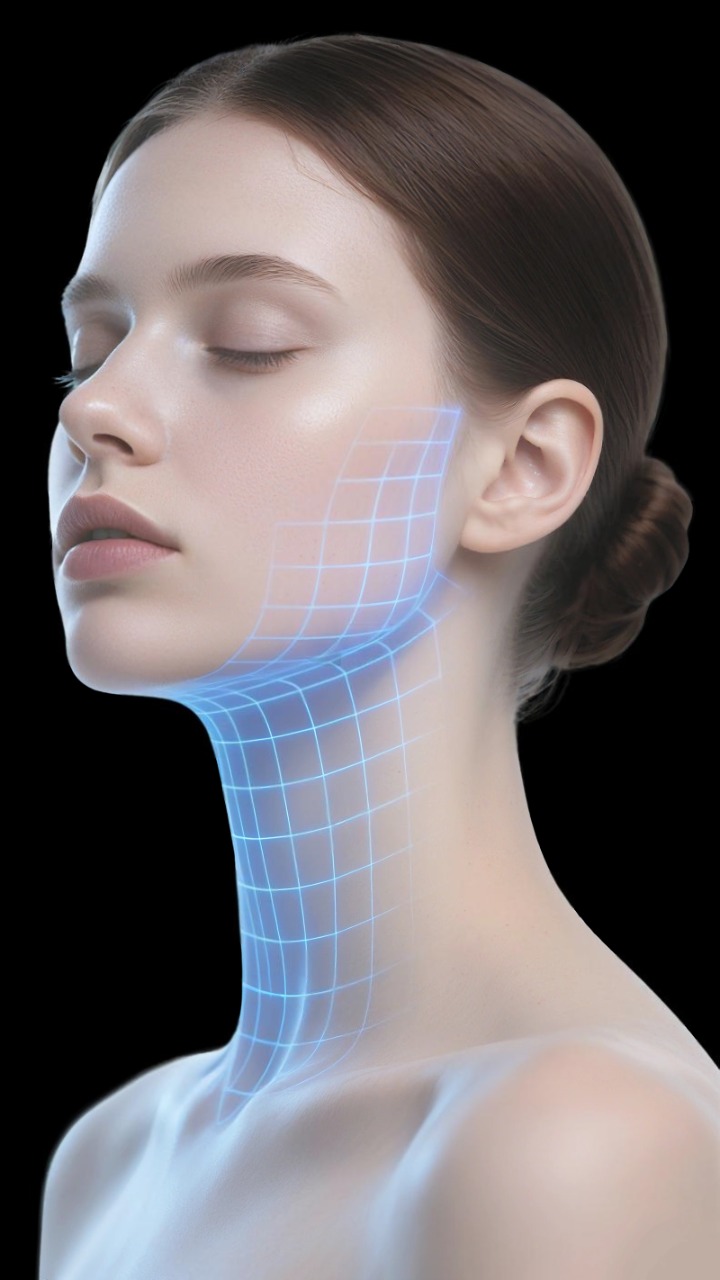
High-frequency RF waves oscillate so rapidly that nerves and muscles can’t react, producing gentle heat instead of visible contractions.
Low-frequency EMS signals move slowly enough for nerves to respond, creating the light “pulse” or “twitch” sensation users often feel.
This difference explains why RF feels warm, while EMS feels active — each working in its own layer for distinct yet complementary results.
🌿 Dual Technology for Comprehensive Skin Rejuvenation
Modern premium beauty devices increasingly integrate RF + EMS to address both skin and muscle layers:
| Layer | Technology | Function |
|---|---|---|
| Dermis | RF | Rebuilds collagen, improves elasticity |
| Muscle (SMAS) | EMS | Strengthens tone, defines contours |
Together, they achieve a 3D lifting and firming effect, rejuvenating from deep within.
🔰 Safety & Usage Tips
Choose devices with CE / FCC certification
Apply conductive gel before use for optimal energy transmission
Recommended usage: 2–3 times per week, 10–15 minutes per session
Avoid use on metal implants, pacemakers, or broken skin
💬 Conclusion
High frequency ≠ strong stimulation — it means faster, smoother, and more controlled energy delivery.
While RF energizes the dermis through thermal activation, EMS tones the underlying muscles with bioelectric pulses.
Rather than competing, these two technologies complement each other — combining collagen regeneration with muscle lifting to deliver visible, long-lasting skin rejuvenation.