
- 86 13631277884
- [email protected]
The "Mechanical Magic" Inside Fascia Guns: Unveiling the Precision Engineering Behind Massage Heads
——From "Electric Drill" to "Muscle Therapist": A Technological Revolution in Soft Tissue Wellness
I. Fascia Guns: From Gym "Electric Drills" to Rehabilitation Marvels
A decade ago, if someone wielded a drill-like device at the gym for self-massage, they might have been labeled a performance artist. Today, fascia guns have become essential tools for fitness enthusiasts. The name itself carries a playful irony – though termed a "gun," its true role is closer to that of a massage therapist.
Etymology & Function:
The term "fascia gun" derives from its English counterpart, referencing its gun-like appearance. Fascia, the dense connective tissue encasing muscles, forms a 3D network that binds muscle fibers. Post-workout, this network stiffens due to lactic acid buildup or microtears. Fascia guns use high-frequency vibrations to "cleanse" these tissues, earning them recognition as medical-grade tools for soft tissue rehabilitation.
Evolution from Medical to Consumer Use:
Originally hospital-bound DMS (Deep Muscle Stimulator) devices costing thousands, fascia guns entered mainstream popularity in 2018 after a viral video showed a famous NBA athlete using one post-game. This "electric drill" moment sparked a fitness revolution.

II. The "Heart Surgery" of Fascia Guns: Transmission Mechanism Wars
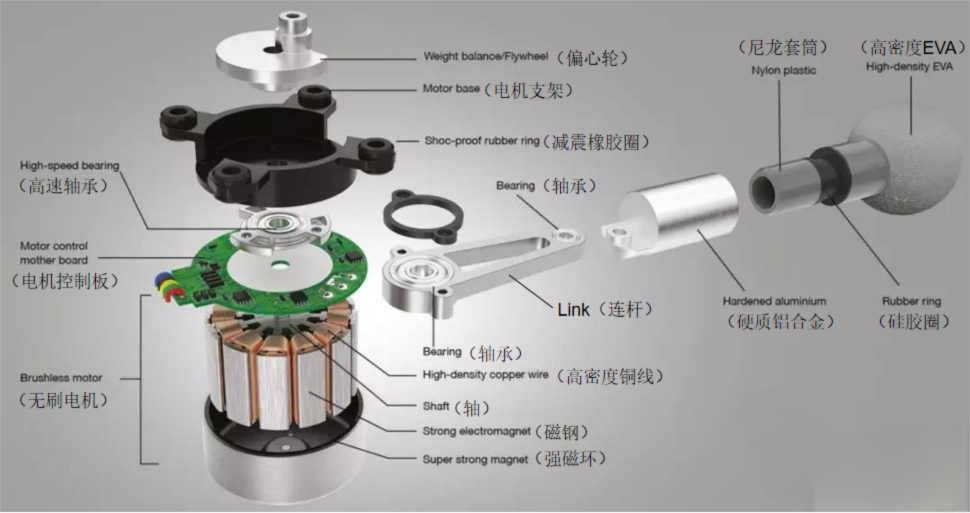
The true magic lies in invisible mechanical engineering that converts motor rotation into linear reciprocating motion – akin to transforming a spinning top into a piston's thrust.
1. Crank-Slider Mechanisms: Fascia's Leverage Principles
Concentric Crank-Slider:
Motor shaft perpendicular to massage head movement, resembling a seesaw. Offers uniform speed but requires centrifugal force balancing to prevent pendulum-like instability.Eccentric Crank-Slider:
Motor shaft aligned with massage head motion, similar to piston engines. Compact design but demands multi-link systems, increasing failure risks.
Patent Innovations:
2025 saw breakthroughs with "universal mounting + self-aligning bearings," enabling 360° rotational massage heads that combine vibration with heat therapy – a "mechanical moxibustion" effect.
2. Material Warfare: Plastic vs. Metal Showdown
Budget Models: Plastic components cost less but fracture under vibration. Reports exist of $100 models disintegrating within days.
Premium Models: Aluminum CNC parts (0.01mm precision) paired with swivel bearings (3-5mm offset) reduce vibration by 40%. Swiss brands even use titanium shafts – 30% lighter while maintaining strength.
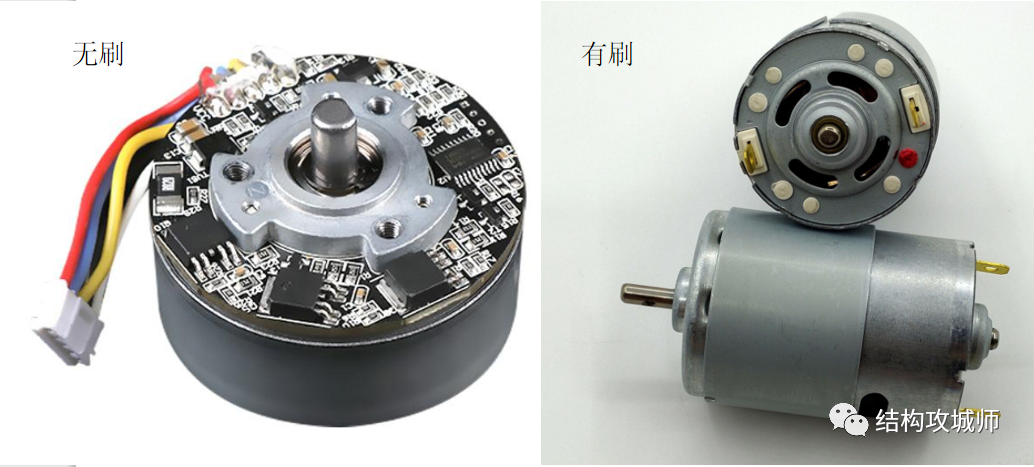
III. Motor Showdown: Brushed vs. Brushless Power Struggles
The motor – the "brain" of fascia guns – wages a battle reminiscent of fossil-fuel vs. electric vehicles:
Metric | Brushless Motors | |
Lifespan | 500 hours (carbon brush wear) | 5,000+ hours (no physical contact) |
Noise | 65-75 dB (drill-like) | 45-55 dB (library-quiet) |
Control | Stepwise adjustments | Seamless variable speed |
Cost | 20% of total price | 40% of total price |
Industry Secrets:
Some budget models falsely claim "brushless" status using recycled motor parts. Test by listening for "hissing" commutation sounds – quality brushless motors operate silently.
IV. Future Frontiers: Fascia Guns in Evolution
User demands drive three major advancements:
Smart Sensors: Pressure-sensitive systems auto-adjust speed when encountering resistance, preventing "hammering bone" scenarios.
Modular Design: Magnetic massage head swaps enable instant switching between deep tissue and fascial layers.
Bionic Tech: 6-axis robotic arms mimic human hand kneading motions, now used in rehabilitation clinics.
V. Buyer Beware: Avoiding "Miracle" Disasters
Certifications: Prioritize FDA/CE-approved devices – avoid "viral" unregulated products.
Ergonomics: Premium models feel like high-end electric toothbrushes; cheap ones resemble wrench grips.
Noise Levels: Sustained noise above 70 dB risks hearing damage.
After-Sales: Demand ≥1-year warranty for transmission systems; motor warranties should be 2+ years.
Conclusion
From gym floors to home basements, fascia guns epitomize human ingenuity in combating muscular fatigue. Next time you use one, listen closely – those rhythmic pulses are miniature engineers conducting a symphony of muscle relaxation.
Engage: Share your weirdest fascia gun experiences in comments!